Shellfish
The majority of shellfish that we stock is from the Galician estuaries, and specifically the Rìas Baixas, or low estuaries.
The estuaries are 16 inlets spaced across almost 1,500 kilometres of Galician coastline, flanked by cliffs, pine and eucalyptus groves, vineyards, fishing towns and over 700 beaches. They form at the mouths of rivers, where the sea level is higher than the river valleys, and are made up of a mix of sea and freshwater.
They are known as Rías - a Galician word related to river (río) and consist of the six Rías Baixas and the 10 Rías Altas (the high estuaries). They are separated by Fisterra, the Galician name for Finisterre (the end of the earth) the most westerly point of Galicia, and believed long ago to be the point where the earth ended and the sun was extinguished each evening.
The Rias Baixas are in southern Galicia, and have calmer waters, making them ideal spots for fish and shellfish to thrive. It’s where the canneries we work with source the majority of the fish and shellfish. The Rías Baixas are:
- Ría de Concurbión.
- Ría de Muros e Noia (named after the two principal towns there).
- Ría de Arousa, the largest estuary.
- Ría de Pontevedra.
- Ría de Aldan.
- Ría de Vigo, the southernmost estuary, shielded by the Cíes, a sealife-rich archipelago of three islands, near its mouth.
- The Rías Altas, in northern and northwestern Galicia, are smaller than the lower estuaries, and more exposed to tempestuous weather. The Rías Altas run from the port of Ribadeo, bounded to the north by the Cantabrian Sea and to the east by the Ribadeo estuary, to the island of Santa Cruz, in the Ría da Coruña. The high estuaries’ more turbulent waters meant it became known as the Costa da Morte (Coast of Death) due to the shipwrecks that occurred there.
The estuaries that form at the mouths of rivers along the Galician coastline are ideal environments for shellfish for many reasons:
- Cold, nutrient and oxygen-rich Atlantic waters are driven into the estuaries by powerful ocean currents, strong tides, and summer winds caused by a natural phenomenon called the Iberian Upwelling System. The result of these nutrient-dense waters mixing with the estuary freshwater is a unique marine ecosystem rich with plankton and small invertebrates which fish and shellfish can feed on and thrive. The Rías are “a gourmet haven for fish and shellfish” is how Real Conservera puts it.
- The estuaries are perfect habitats for fish nurseries. Sheltered from the open sea, they have calmer currents and less predators, an environment well suited to young fish.
- “The variety and quality of the Galician fish and shellfish is unmatched,” Real Conservera Española says. “From the scallops of Cambados, goose barnacles from Costa da Morte, octopus from Mugardos, and cockles from Noia, to the rope-grown mussels with Protected Designation of Origin, Galicia offers an extraordinary range of seafood. But it’s not just about variety — it’s about intensity of flavour, perfect texture, and ultimate freshness. Each species has its season, its method of harvest, and its ideal habitat.
- Fishing in Galicia is artisanal and sustainable. "Most fishing in Galicia is small-scale, using traditional, low-impact methods like traps, hand harvesting, or line fishing," Real Conservera say. "This ensures not only sustainability, but also a gentler handling of the catch . In Galicia, seafood isn’t just fished — it’s cared for.” In addition, Pesca de Galicia – a system implemented by the Galician government – guarantees complete traceability for fish and shellfish.
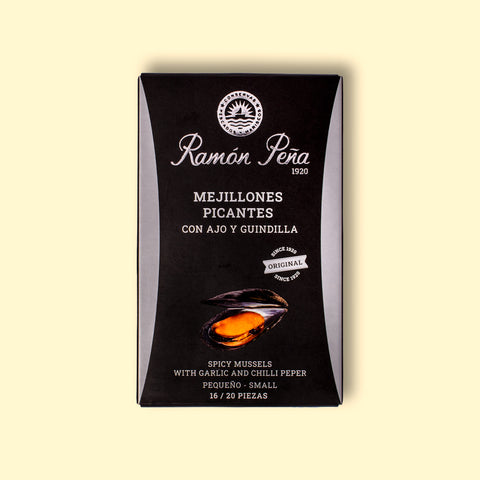
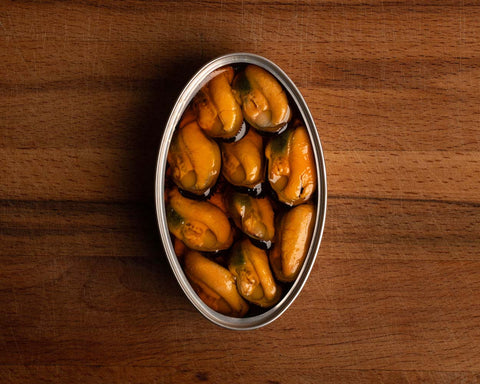
- The bateas - pioneered by Galician canning’s founding father José Peña Oubiña - are key to the renown of Galician fish and shellfish. Galicia is the world leader in this particular form of aquaculture: rope-grown mussel farming. “Mussels grow suspended from floating rafts called bateas, feeding naturally on phytoplankton from the sea — no feed, no chemicals. The result: plump, flavourful, and exceptionally clean mussels,” Real Conservera says.
- The rope-grown Galician mussels that are farmed in the Rías Baixas filter impurities from the estuaries, making them ideal environments for other shellfish and fish to thrive.
More about shellfish
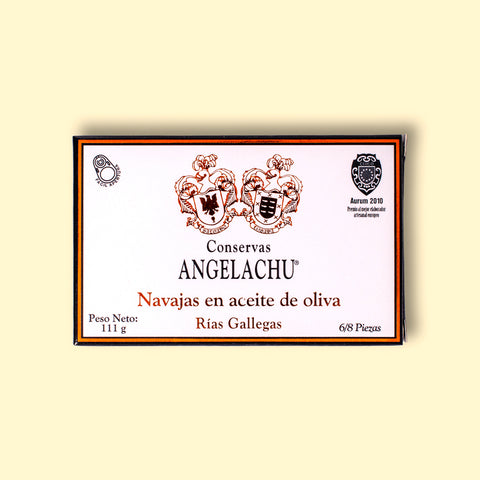
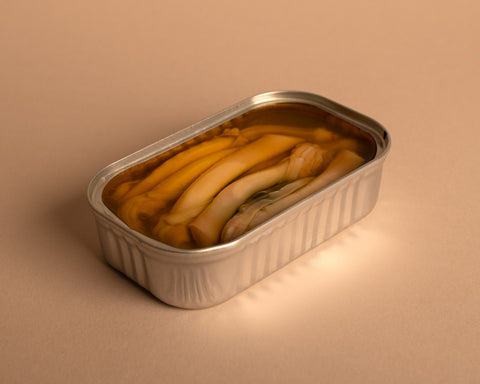
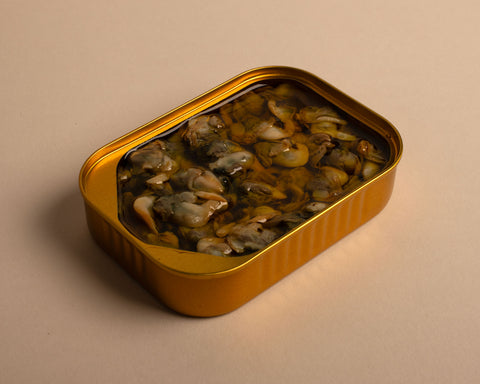
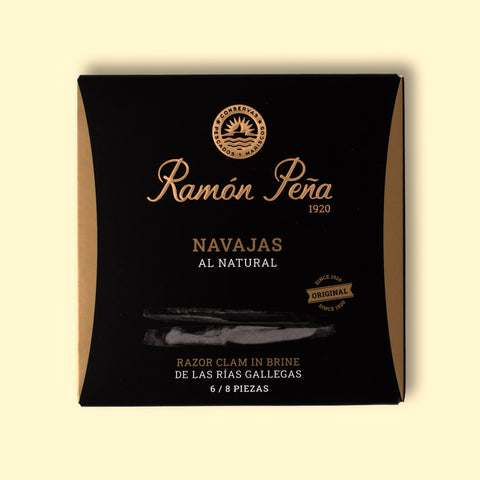
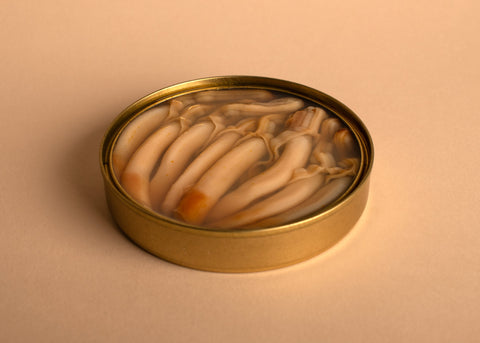
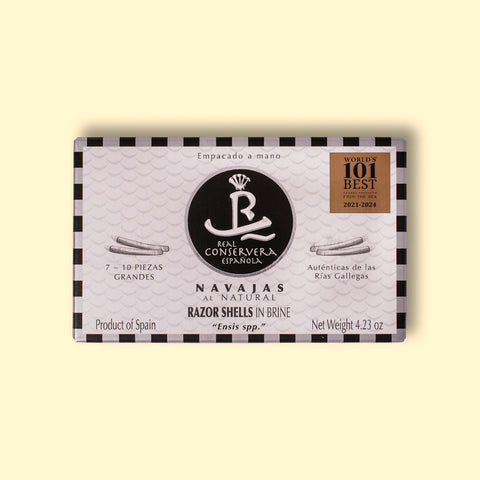
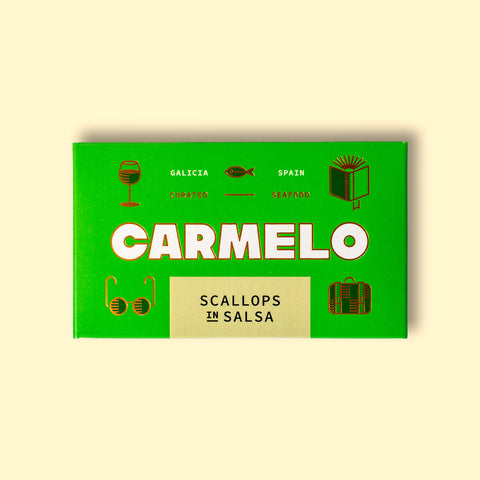
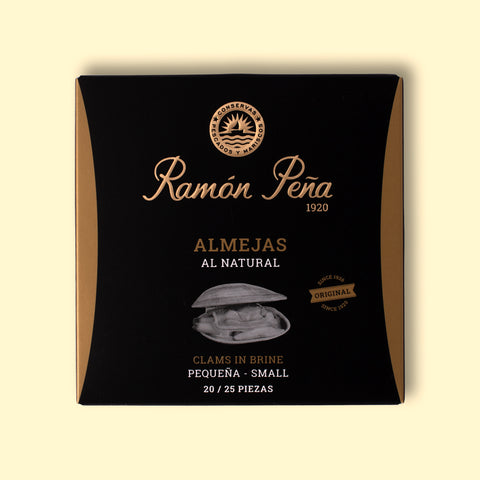
- Recipes with tinned shellfish: try Carmelo smoked oysters on sourdough with cream cheese, chopped parsley and a squeeze of lemon juice, Ramón Peña tinned scallops, octopus or squid in a seafood paella, Angelachu, Real Conservera or Los Peperetes canned razor clams with a splash of salsa straight from the tin.
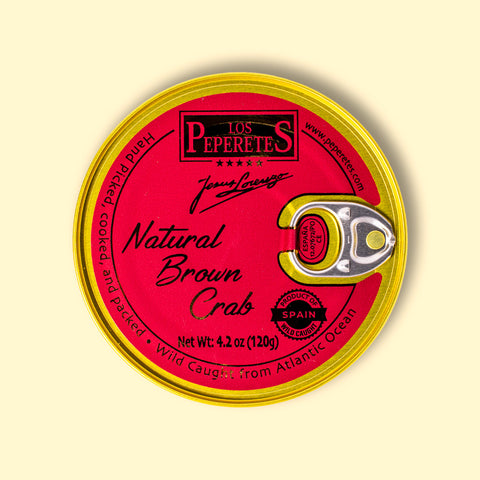
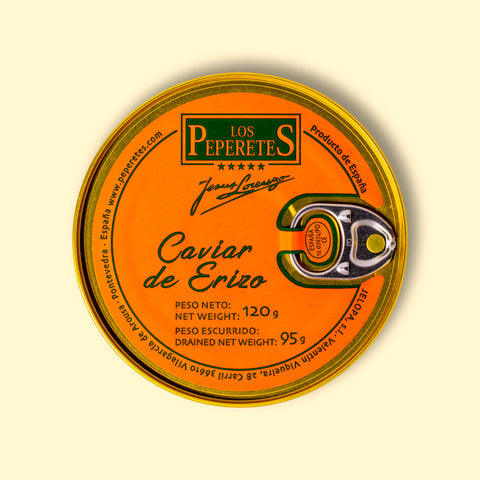
- PDO seals are an EU-regulated quality seal that identify food products that originate from a specific area. Canneries such as Real Conservera and Los Peperetes use these seals, because the canneries believe Galician fish and shellfish is superior in quality to that caught and harvested elsewhere.
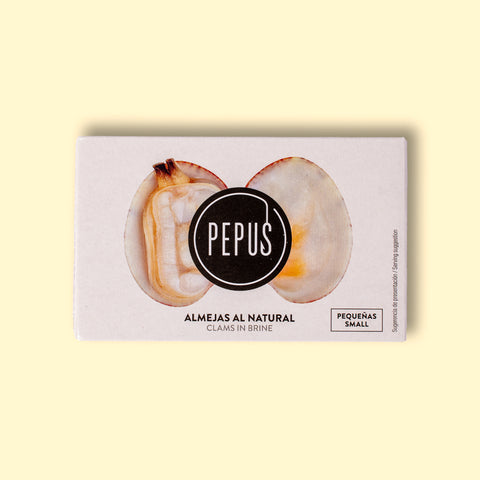
- Tinned shellfish is highly nutritious. Clams are an excellent source of heme iron, the type that the body can easily absorb. Tinned mussels also contain vitamins A and B12 for brain and nervous system health, zinc, which helps immunity, metabolism, digestion and skin health and iron, a protection against anaemia and fatigue. Tinned clams are an excellent source of vitamin B12 and iron too. Canned clams also contain selenium which bolsters immunity and phosphorus for strong bones and teeth. Razor clams contain calcium and iron. Cockles are a very good source of vitamin B12 and B6, vitamins the body cannot produce and needs to source from food. B6 is said to be good for brain health and mood. Cockles are also high in iron, selenium and phosphorous. Tinned squid is high in B6, B12, selenium and phosphorous. Canned octopus is a good source of B12, iron, selenium and calcium. Canned scallops are a source of selenium and phosphorous and zinc, which helps immunity, metabolism, digestion and skin health. Canned oysters are a good source of B12, zinc, iron, selenium and copper, which helps the body absorb iron, and assists the immune and nervous system.