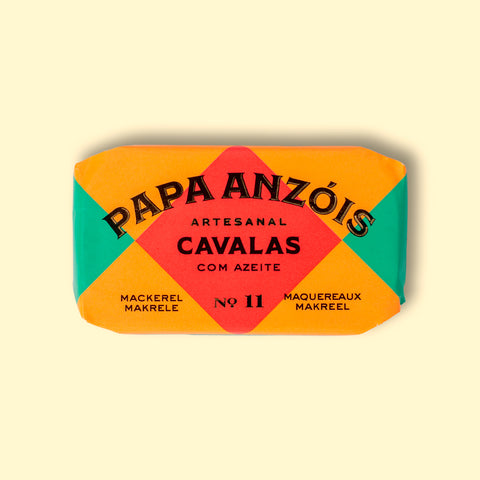
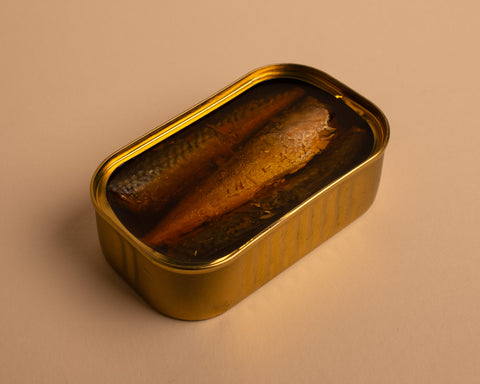
Mackerel:
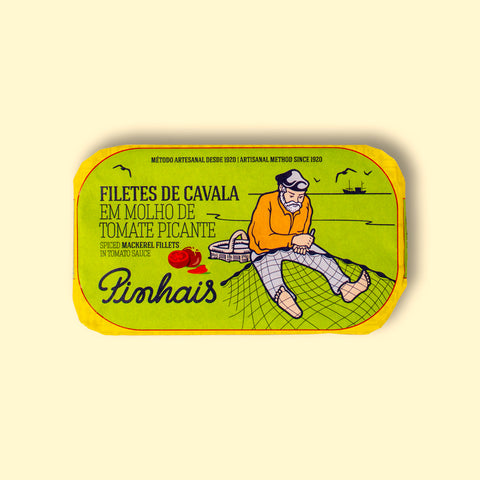
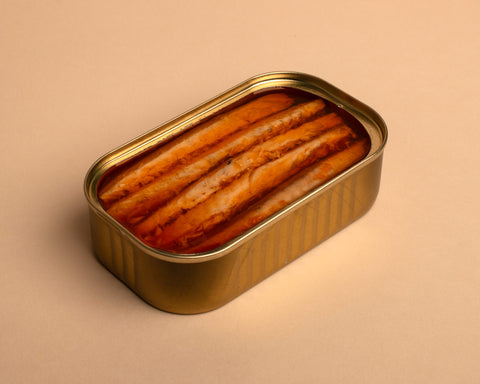
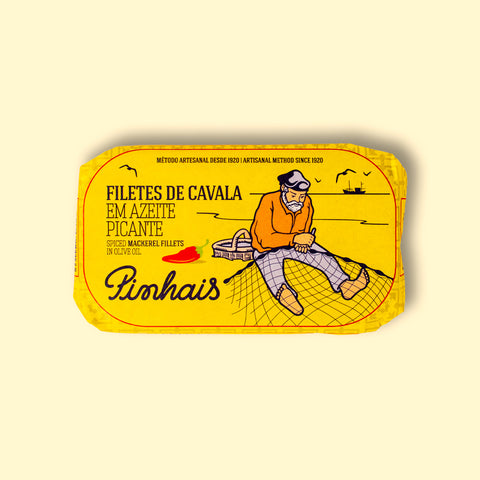
The mackerel in our tins is Atlantic mackerel (Scomber scombrus). It is an oily fish like sardines, anchovies, salmon and herring, and is very omega-3 dense. It is fished purse seine and by hook and line off the Portuguese, Scottish and Cornish coasts.
Mackerel are easily recognisable, as they have distinctive dark tiger-like stripes on blue green flesh that fades to a silvery underside. Mackerel usually move in vast shoals - reportedly up to 9km long, 4km wide and 200 metres deep - and swim close to the shoreline in summer. Their diet is plankton and small fish. When fully grown, Atlantic mackerel can reach a length of more than 60cm and weigh upwards of 3.4kg.
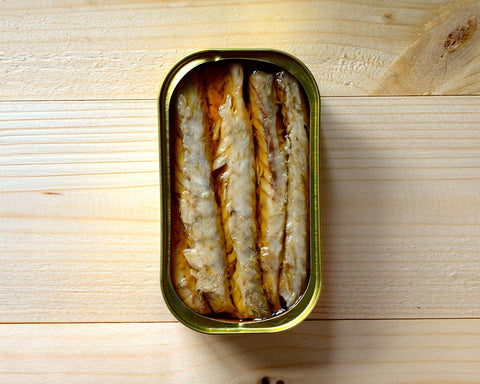
Tinned mackerel has a rich flavour that is milder than sardines, and a beautiful buttery texture. Pairing mackerel with something sharp or acidic is a good idea, something to cut through the oiliness of the mackerel. A fillet or two on top of a potato salad with lemony mayo. With capers, or chilli and garlic in a pasta. Add cream cheese, parsley and lemon to some mackerel fillets and blitz to make a pâté. Tinned mackerel on toast also works well, the crunch of the freshly toasted bread with the tender mackerel fillets works well. Just add shallots, parsley and and a squeeze of lemon juice.
Mackerel 101
Mackerel is an oily fish, meaning it contains high levels of omega-3 fatty acids in its flesh, unlike white fish where omega-3 is concentrated in the liver.
Tinned mackerel is full of nutrition. It is an oily fish with very high levels of omega-3 fatty acids which promote heart health by helping to lower cholesterol and blood pressure.Tinned mackerel is an excellent source of vitamins: B12 and B3 for energy and immunity, and vitamin D for immunity and bone and muscle health. Tinned mackerel contains minerals such as selenium which protects against cell damage and phosphorus for healthy bones and teeth.
Horse mackerel is not the same as mackerel. It is a species of jack mackerel. The scientific name for (Atlantic) horse mackerel - the fish that Papa Anzóis tin - is Trachurus trachurus. Trachurus comes from the two Greek words, trachys and oura meaning rough and tail respectively, a reference to the serrated edge on the side of the horse mackerel. Horse mackerel is popular in Japanese and Mediterranean cuisine. The name horse mackerel might derive from the Dutch word horsmakreel which means a mackerel that spawns in shallow sea waters. Or it may come from a legend that smaller fish rode on the backs of horse mackerel when they wanted to travel long haul.