Cantabrian Anchovies
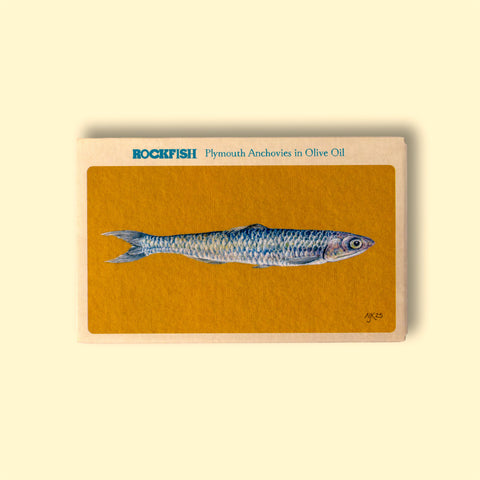
We source Cantabrian anchovies only. Cantabrian anchovies are fished sustainably in the Bay of Biscay in the Cantabrian Sea, and they are the best anchovies for all sorts of reasons.
It’s partly down to context. The Cantabrian Sea's weather patterns, currents and water temperatures - the merroir - help create the flavour and texture that makes the Cantabrian anchovy the gold standard amongst anchovies.
Anchovies in the Cantabrian Sea grow to a good size because the choppy water there is oxygenated and strong currents drive deeper, nutrient-dense waters to the surface, supporting plankton growth which the anchovies feed on.
The Cantabrian Sea’s turbulent waters also mean that the anchovies have to be strong swimmers. This, together with the coldness of the water, helps firm their flesh sufficiently to stand up to the salt-curing.
They are fished between early March and late June when the anchovy's fatty reserves are at their peak, ready for summer when they spawn. This high fat content also assists with the long curing and development of flavour.
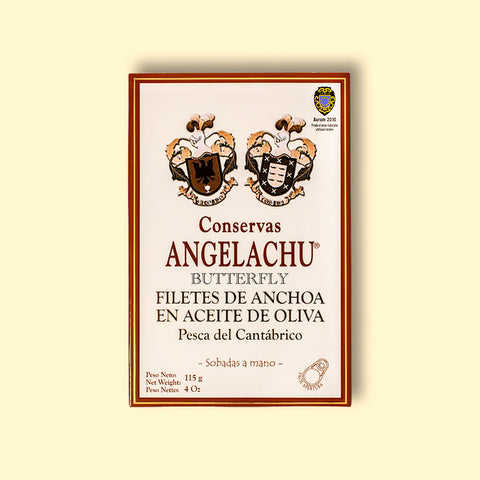
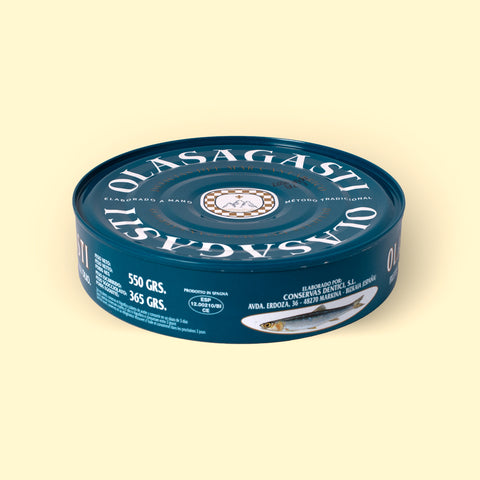
The anchovies we stock come from canneries in the Basque Country and neighbouring Cantabria. Solano Arriola anchovies are plump and punchy. Zallo anchovies are slightly milder. Olasagasti fillets are meaty and somewhere in the middle salinity wise. Angelachu fillets have a very mild salinity and a super-refined finish. Carmelo Santoña anchovies are salty and silken textured, and Carmelo smoked anchovies are a way to get your salty anchovy fix and enjoy an extra layer of flavour.
Attracted by the quality of the anchovies the Cantabrian Sea produced, Italian settlers brought their canning techniques to this part of the world over a century ago. As a result the techniques are honed to perfection and another reason for the Cantabrian anchovy’s renown.
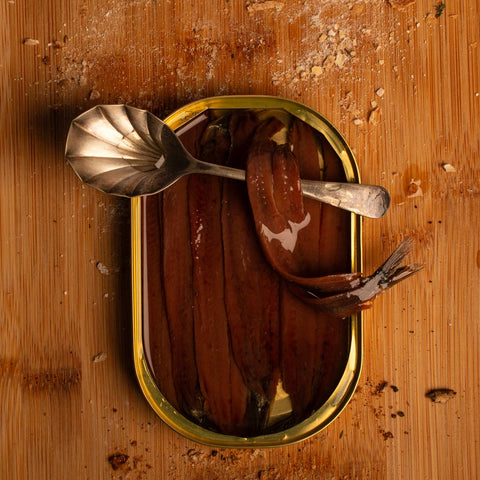
The very best bocarte - the Spanish name for the anchovy before it is cured - are bought at ports along the Cantabrian Sea coast. The anchovies are then quickly run from the harbour to the canneries where the curing process begins - on the day the anchovies are caught. The anchovies are first submerged in barrels filled with brine for one to two hours when they reach the cannery to firm the flesh. The anchovies are then prepared by hand and preserved in barrels filled with salt - a layer of salt, a layer of anchovies and so on. Because their flavour is short-lived after they’re caught, they are cured rather than exported. Zallo and Olasagasti anchovies are cured for a minimum of six to eight months, Angelachu, Solano Arriola and Carmelo for up to two years. After curing, the salt is washed from the anchovies with water and brine, or in the case of Angelachu removed with fishing net. The sobadora - the artisan that fillets the anchovies post-curing - then removes the hair-like bones a machine would miss and safeguards the delicate texture a machine would compromise. The numbered slip of paper inside these oil-packed anchovies identifies the sobadora and is like a signature on a work of art.
More about anchovies
- Anchovies are oily fish – like sardines, mackerel and salmon. They are a small (five to six inches long on average) forage fish - like sardines. Larger fish like halibut, salmon and sharks feed on them. They belong to the family Engraulidae (Engraulis is Greek for anchovy), and, like sardines, the order Clupeiformes. They’re packed with tissue-repairing, muscle-building protein, and omega-3 fatty acids for heart health. They’re a good source of B vitamins too (niacin, riboflavin and vitamin B-12 which help promote brain, eye and skin health). And they also contain calcium, iron and zinc.
- There are 144 different species of anchovy. Cantabrian anchovies, or European anchovies (Engraulis encrasicolus) are fished sustainably in the Bay of Biscay in the Cantabrian Sea.
- Anchovies produced in the Cantabrian fishing town Santoña are arguably the ultimate Cantabrian anchovy. The town is where the salted Cantabrian anchovy was born. The anchovies from here are always Engraulis encrasicolus - the finest example of the anchovy due to its high omega-3 content and flavour profile. Angelachu, Solano Arriola and Carmelo anchovies are all produced in Santoña.
- Tinned anchovy recipes. Anchovies have been popular for centuries. The Romans made garum - a fish sauce - from them (and tuna). They’re a flavour-enhancer in sauces too - a little (two or three fillets) goes a long way, because they’re umami-packed. As mentioned earlier, the salting traditions brought to Spain originated in Italy and there are plenty of Italian anchovy-based recipes. Spaghetti puttanesca: onion softened down in olive oil with chilli and garlic, mixed with olives, anchovies, capers and tomatoes and then tossed through spaghetti. Mozzarella in carrozza (mozzarella in a carriage): French toast wrapped around a mozzarella slice and two anchovy fillets, closed with a cocktail stick and deep fried. They’re in Provençal condiment tapenade: puréed black olives, capers (tapéno is the Provençal word for caper), garlic, lemon zest and the juice, and anchovies. In the Basque Country they’re skewered with an olive and a piparra or guindilla pepper to create the Gilda - named after Rita Hayworth’s salty, green and spicy character in the film of the same name. And here there’s Scotch woodcock. Like the rabbit-less Welsh rarebit - mustard, Worcestershire sauce and beer or stout infused cheese on toast - Scotch Woodcock is a misnomer. Not woodcock but anchovies with scrambled eggs on buttered toast.
- Store anchovies between 1-8°C. Keeping them in the fridge maintains their taste and texture for the shelf life specified on the tin. Anchovies can be stored on a cool, dark shelf, but ideally keep them in a fridge if you want to preserve them in their optimal condition for longer. Anchovies are only semi-preserved. This means that a harmless bacteria remains in the tin after it is sealed. This bacteria is kept at bay by the cold but in warmer temperatures it eventually softens the texture of the anchovies, interferes with their flavour and may cause the tin to swell a little. Remove the anchovies from the fridge 20 minutes before you are ready to use them to give the olive oil chance to liquefy again. After the tin is opened, anchovies must be stored in a fridge and consumed within 7 days.
- Once opened, cover any fillets you don’t use in olive oil and seal with tin foil and keep refrigerated and they will last three days, and most probably a little longer.
- Brown anchovies are anchovy fillets cured in salt, and white anchovies are fillets cured in vinegar. White anchovies are known as boquerones in Spain. Besides the acidic rather than salty taste, the texture is softer than the brown anchovy.