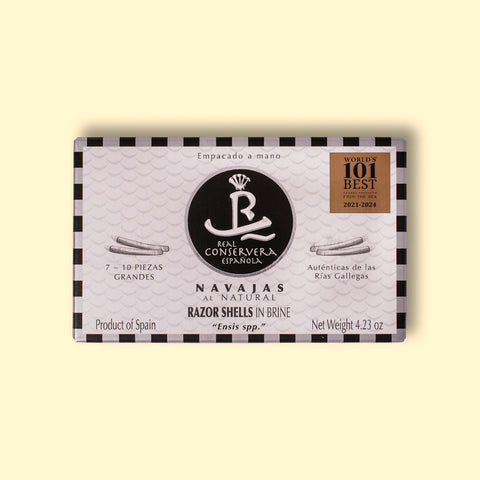
Introduction to razor clams
Freedivers swim to the sandy beds of the Galician estuaries without breathing apparatus to painstakingly harvest these exquisite delicacies.
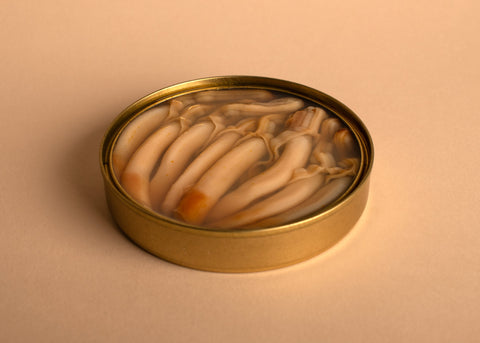
The razor clams are then transported live to the canneries where they are carefully purified, cooked and canned by hand, usually in a simple brine so that their unique marine flavours shine. It is this labour of love that ensures all the incredible flavour of the razor claim is distilled in the tin.


Michelin-style razor clams
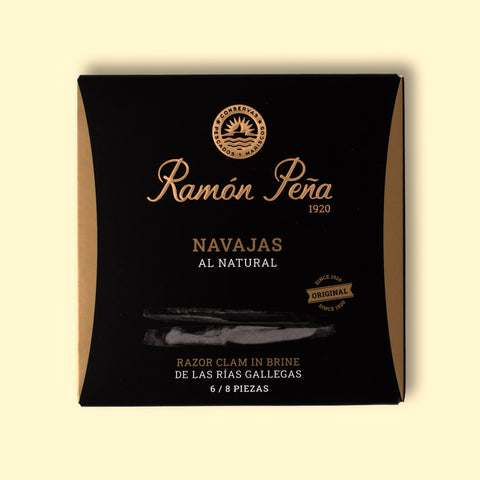
Ramón Peńa recommends this “one-bite, one-sip Michelin-style experience” to celebrate the remarkable mollusc. The cannery describes it as “Minimal product. Maximum expression”
“Drain off any excess brine from the razor clam. Then using tweezers, place a single razor clam upright in a narrow glass tube, highlighting its natural shape. Add a small amount of brine to the tube, being sure not to cover the clam. Place the razor clam in your mouth first, then immediately drink the brine. Let both elements combine naturally on the palate before chewing. The experience should be clean, mineral and deeply marine. The texture of the clam will meet the salinity of the brine in a perfectly balanced sequence. A pure oceanic flavour explosion, without interference.” Are you in? Tag us on Instagram if you try it.
How razor clams are harvested
Using a powerful muscular foot, the molluscs burrow vertically into the sandy estuary beds where they live up to half a meter down. This means industrial harvesting is out of the question. Razor clams are hand-harvested by freedivers without breathing equipment, just as they have been for generations. The divers dive to the seabed, holding their breath, locate the holes left in the sand by the burrowing clams and then carefully extract them by hand. The dives typically occur at depths of five to ten metres, sometimes slightly deeper. It’s painstakingly precise work, and a lot of experience is needed to locate and extract the clams without damaging them. The slow harvesting methods and strict seasonal regulations mean the clams are canned in small batches, and the marine environment is not harmed at all.
Ensis arctuas and Ensis siliqua
The razor clams from the Galician estuaries have unique textures and a clean ocean flavour that other razor clams lack. There are two species: Ensis arcuatus and Ensis siliqua.
Ensis siliqua are slender and more elongated with a slightly sweeter and more delicate taste. Los Peperetes sometimes works with this species, describing it as a “gastronomic delicacy.” Ensis arcuatus are curved, with a more concentrated, robust, briny flavour. Ramón Peña and Real Conservera Española work exclusively with this species of razor clam. Real Conservera believes the Galician razor clams it works with evoke this hallowed coastline more vividly than any other of the region’s conservas.
How razor shells are preserved
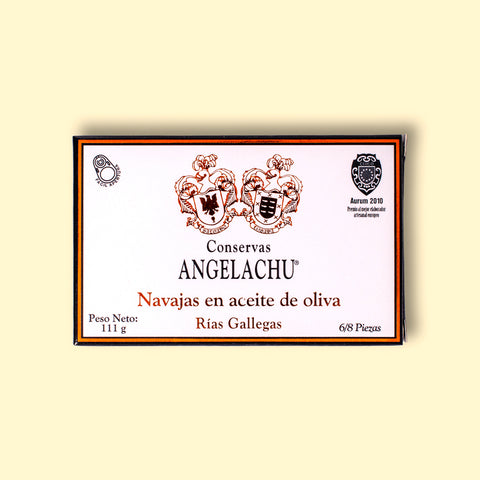
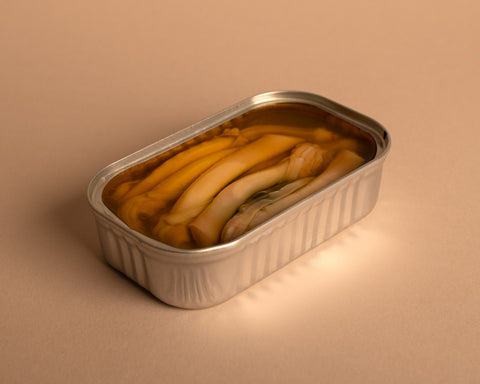
Razor clams are often preserved in a simple brine. “When the raw ingredient is extraordinary,” Real Conservera says, “the best recipe is simply to preserve it with the utmost respect.” Ramón Peña agrees, “The light brine preserves the natural taste without masking it. The objective is to highlight the purity of the product.” Remember not to discard the brine. It’s full of concentrated flavour: “High-quality razor clams are preserved naturally in a light brine made simply from water and salt,” Real Conservera says. “During sterilisation, the shellfish releases its natural juices into the liquid, creating a broth that captures the true taste of the sea.” The cannery recommends enhancing seafood rice dishes with the brine, adding depth to sauces, or enriching fish stocks, even enjoying it on its own. Los Peperetes also cans the razor clams in simple brine, and breaks all the rules to delicious effect by adding a garlic-infused olive oil too. The cannery are careful to ensure the garlic is subtle enough not to overwhelm the delicate flavour of the razor clams. They recommend searing the clams on the grill to “take them to the next level”.
Canned Vs fresh razor clams
Canned razor clams are superior to fresh ones, Real Conservera believes. “As the months pass, the razor clams slowly absorb the nuances of the natural broth, creating a more rounded flavour and an even more harmonious texture. Much like fine wine or carefully aged cheese, exceptional canned seafood rewards patience,” Real Conservera says. “Many connoisseurs intentionally cellar their finest tins for several months before opening them.”